
Substance use disorder is a serious illness that, if left untreated, can lead to premature death. In Finland, the number of drug-related deaths and drug-related harms is among the highest in Europe. In the accounts of people living with substance use disorder, a recurring theme is the need for professionals to better understand addiction.
Substances and their effects on individuals and society are increasingly making headlines. Recently, discussions surrounding the synthetic cathinone alpha-PVP, commonly known in Finland as “peukku,” have attracted significant attention. However, substance use disorder as an illness remains unfamiliar, even to many professionals.
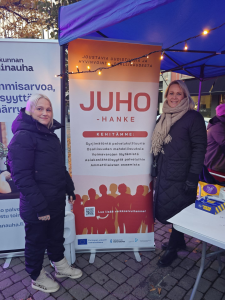
The JUHO project (Flexible Reforms and Wellbeing through Inclusion) aims to improve the wellbeing and social inclusion of people with substance use disorders and to develop services in the Satakunta Wellbeing Services County to better meet clients’ needs. Key themes of the project include increasing awareness of substance use disorder as a disease, developing a non-discriminatory service culture, and emphasising the importance of compassionate, non-judgemental professional interaction.
One human being to another – the importance of compassionate encounters
The JUHO team includes expert by experience Vivika Tolvanen, who has firsthand knowledge of the impact that both positive and negative encounters can have in difficult life situations.
– I well remember an experience where help for substance use was offered during police questioning in a non-blaming way. Even though I didn’t take the offer at the time, the fact that it was made stayed with me. I also have positive memories from times when I was detained at a police station. Although the situation was bad and I had done something wrong, a police officer took time during his shift to genuinely talk with me about how I was doing. What made those conversations special was the feeling that they had, in a sense, taken off their uniform and spoken to me as one human being to another. It felt like they truly cared about how I was doing.
Through her work as a peer instructor and expert by experience, Tolvanen has spoken with many people living with substance use disorder and observed some recurring patterns in their experiences.
– I’ve heard many accounts where emergency help took hours to arrive, or where the only assistance provided was transport to a hospital, followed by discharge without any follow-up care plan. Many also feel that emergency services lack expertise in substance use issues and do not understand addiction as a disease. Fear related to child welfare services is also common: people with substance use disorders fear being automatically seen as unfit parents whose children should be taken away. There is a clear need to increase awareness and encourage honesty that is not punished but instead met with joint problem-solving and support, Tolvanen explains.
Alongside negative experiences, there are also signs of hope. Based on discussions, Tolvanen has noticed that employment services have begun to better understand the importance of recovery. Some people have had surprisingly positive experiences with the police, where questioning has included offers of support and genuine understanding. Low-threshold meeting places have also provided encounters that build trust and offer support at critical moments. The need for improved substance use expertise remains evident still.
JUHO solutions for social and health care professionals
In 2022, the Finnish Institute for Health and Welfare (THL) issued recommendations for drug policy and drug-related work in Finland, but these have not been widely implemented. This is partly due to legislation, but more significantly due to gaps in knowledge, expertise, and service provision. Alongside discussions about resources, more attention should be paid to service content and professional competence. In Satakunta, expertise in encountering intoxicated individuals, strengthening inclusion, and supporting client agency remains limited.
The JUHO project seeks to increase understanding of substance use disorder as an illness and to demonstrate the importance of building an equal, empathetic, and inclusive service culture. Every interaction can be a turning point for someone who has been coping with their illness alone.
Through training sessions and workshops, the project aims to strengthen professionals’ knowledge and readiness to support and assist people with substance use disorders. The first training sessions will take place in the spring. In the so-called TIETO Forums, social and health care professionals receive up-to-date information on substance use disorder, along with practical ideas and insights for their work. In so-called Co-development Workshops, professionals who often encounter people who use substances, experts by experience, and peers collaborate to develop concrete solutions for improving services, based on expert input and best practices.
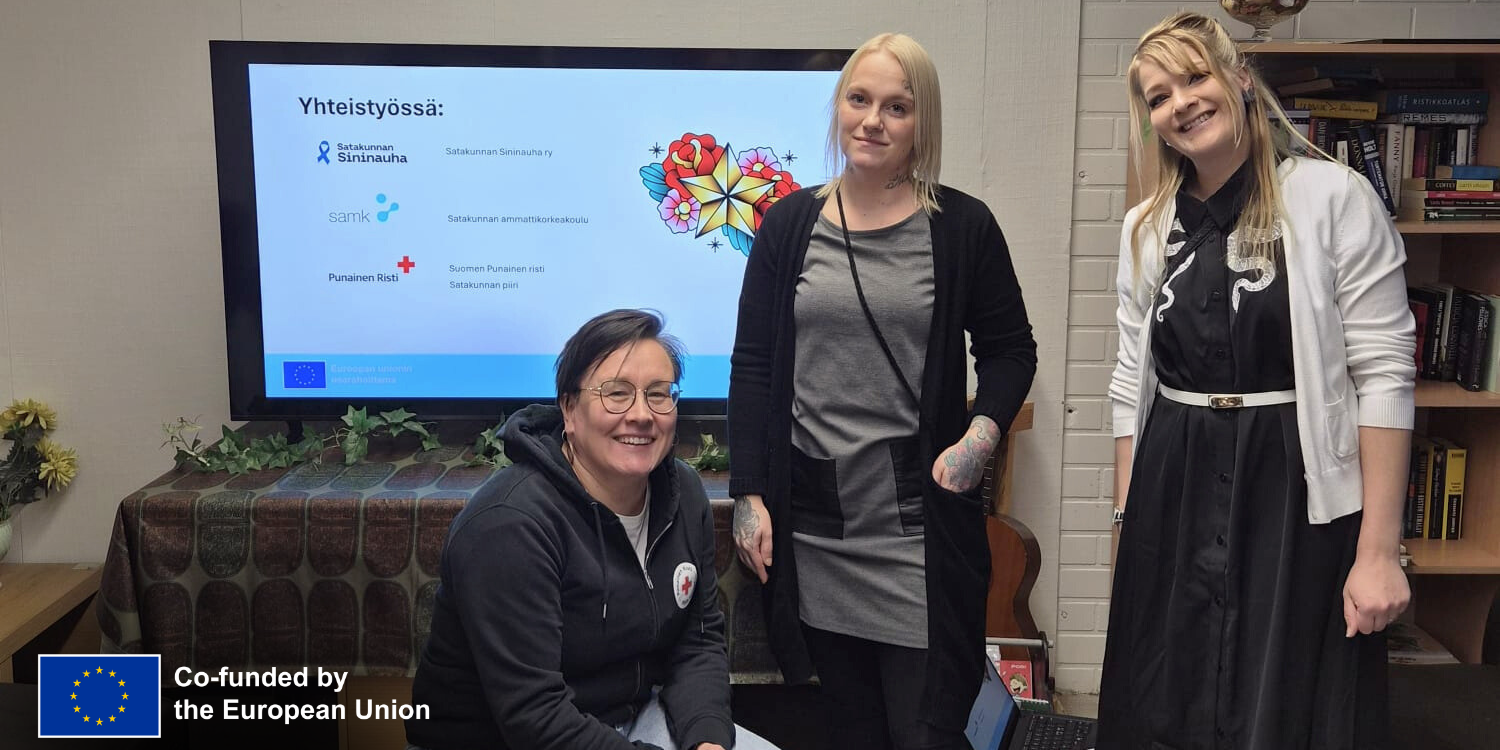
The JUHO project is implemented by Satakunta University of Applied Sciences in cooperation with Satakunnan Sininauha. The project is co-funded by the European Union.