
In recent years, artificial intelligence and deep learning have brought significant advances to medical image recognition. One of the goals of the HyvoData project is to build a system that can identify the healing stage and tissue type of chronic wounds from images as accurately as an expert.
A chronic wound is a wound that does not heal normally within weeks but remains open for a prolonged period. Examples include diabetic foot ulcers, venous leg ulcers, and pressure ulcers. The ageing population and increasing prevalence of chronic diseases have led to a rise in the number of these wounds and in healthcare costs. It is estimated that the treatment of chronic wounds can account for up to 3–5 % of healthcare expenses. The highest costs arise from hospital stays, outpatient visits, and home care.
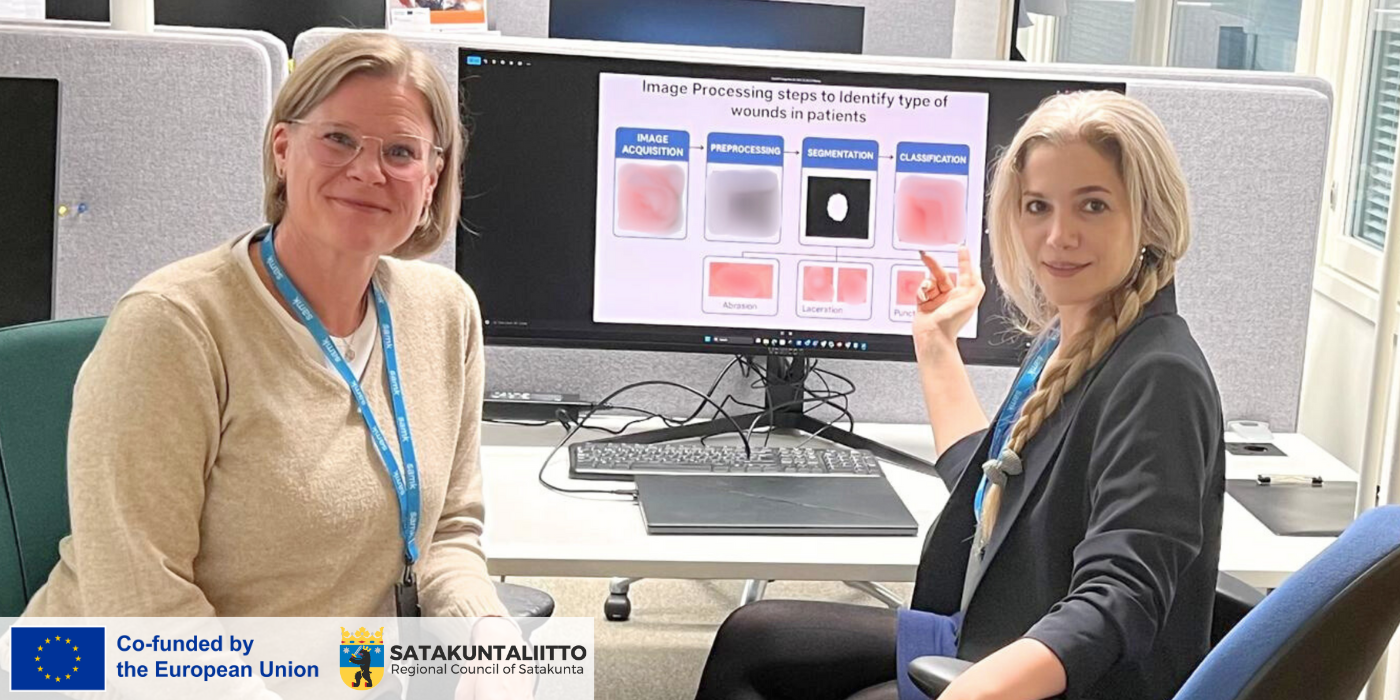
In Finland, AI applications for wound recognition are not yet utilised or implemented in clinical practice, despite the extensive development work that is being done internationally. One of the objectives of the HyvoData project is to improve the identification of chronic wounds through an AI-based medical image recognition system, developed in collaboration between wound care specialists at Satasairaala and the AI team at Satakunta University of Applied Sciences.
Safety and ethics first
In collaboration with Satakunta University of Applied Sciences (SAMK), the collection of chronic wound images from Satasairaala’s archives has started. The aim is to collect and classify 500–1000 images of various stages of wound healing. Wounds will be categorised by type (e.g., granulating, necrotic, covered, dry), and additional features such as redness around the wound, signs of infection, excessive moisture, and deeper tissues like tendon and bone will be identified.
Chronic wounds are typically photographed during appointments, and in the process of collecting, it is ensured that all identifiable elements are excluded. Data protection practices play a crucial role throughout the development process. All materials are handled anonymously and securely, following national and international ethical guidelines.
Better care and improved patient safety
This new AI-based system may, in the future, improve the recognition of chronic wounds, speed up care planning, and enhance patient safety, especially in areas where wound expertise is limited. Additionally, the system may bring savings to the tight budgets of wellbeing regions and open pathways for new development projects.
Once the AI model is built, its ability to recognise wound types will be compared to expert assessments. Finally, the system is intended to be tested in patient care.
The HyvoData project is co-funded by the European Union.